 GENOPOOL
ERA I
The Mandate
Ten climate sectors to stabilise. Programme HELIX designs eight maintenance species in-lab: ecosystem staff, engineered to spec.
HOURLY MAP SEED · PUBLISHED ON-CHAIN · PROVABLY FAIR
GENOS™ v5.0 · MORPHOGENESIS DIVISION
Capture. Breed. Race. Trade.
Lasso wild specimens with a fully readable genome, evolve them through deterministic breeding, and race them on physical tracks that rotate every hour. A skill-money game: the talent wins, not the draw. No gambling.
Capture. Breed. Race. The prizes are won, never promised.
Document GP-0003: Historical record (partially redacted)
Genopool Industries holds the terraforming concession for island GP-7. What happened between the mandate and the racing league is a matter of public record. Mostly.
Ten climate sectors to stabilise. Programme HELIX designs eight maintenance species in-lab: ecosystem staff, engineered to spec.

On ██/██/████, containment at Site Alpha failed. The populations crossed in the wild and their genomes recombined freely. The wild geno pool was born. Site Alpha was sealed.

Recaptured specimens, aligned on a track, outperform remediation on every metric the concession measures. The disaster was requalified as a programme. You are the field workforce.
Document GP-0006: Operating loop
Scan a wild spawn for free: the full genome, nothing hidden. Keep it only if you want to.
Cross two specimens. The outcome is deterministic and previewable in full before you pay. No hidden roll.
Enter a physical track. Every biome rewards a different build. The clock is certified and replayable by anyone.
List a specimen on the Specimen Transfer Registry. The genome, pedigree and palmares travel with it.
Document GP-0008: Contest of skill
Farm the wild well. Breed a sharper specimen. Read the hourly track and out-race the field. Prize pools are real USDC, paid from entry tickets minus a posted fee: a contest of skill, not a wager. Nobody is handed money here. You win it, on a seed everyone can replay.
Capture, breed and drive better than the field. Every input is skill; none of it is chance you paid for.
Enter a bracket for a known ticket. The prize pool and the map are public before you commit. Placement pays in USDC.
Cage price is fixed and blind to rarity. What you find is yours; the operator takes a posted commission only when you sell.
Document GP-0031: Canon registry
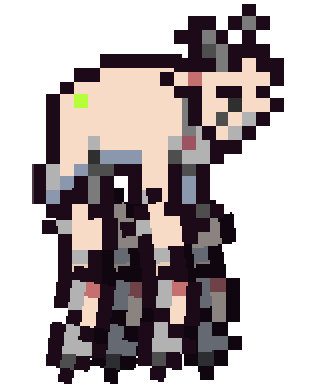
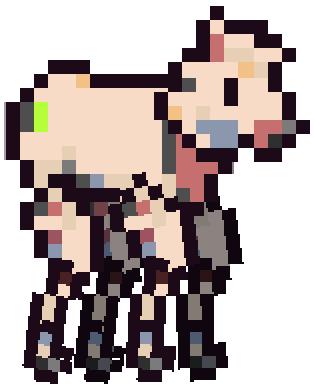
Every specimen belongs to a family with its own morphology bias. Genomes are sampled from a shared pool: the same distribution as the wild, no re-rolls.






Document GP-0055: Terrain rotation
Each hourly track favours different builds. A tripod that loses on flat ground can win on ice for one hour a day, so niche specimens keep their value.
favours grip & traction

favours low friction, ice

favours wet, heavy footing

favours heat & loose sand

favours wind & long climbs
favours tight, technical lines

favours low visibility
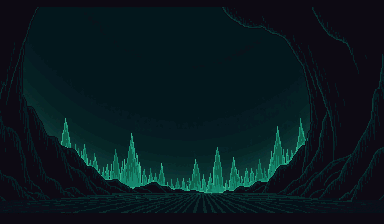
favours verticality & gaps

favours hazards & heat

favours tidal, shifting ground
Document GP-0070: Facility map
The world hub is a working lab. Each station does one job in the loop (scan, cross, register) and every readout on the wall is the same data the chain stores.

Scan a specimen down to the locus. Every allele on record, nothing revealed later.
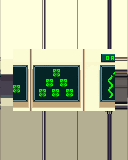
Preview a cross in full before you commit. The outcome is computed, not rolled.
Register for the hourly bracket. The map is public before you enter.
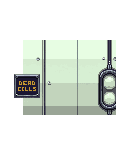
Payments settle on-chain, wallet to program. The Treasury never holds your funds: it watches them pass.
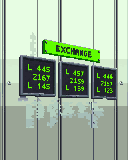
File a specimen for transfer at a known price. The 5% royalty is enforced by the asset itself.
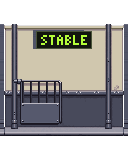
Your specimens on record: vitality, boarding, pedigree. A land stable shortens recovery time; nothing here makes a specimen faster.
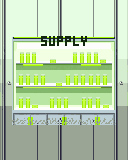
Field gear and cosmetics, priced in Scrip you can only win by playing. The lasso is not for sale. Article 3.
DOCUMENT GP-0042: PUBLIC RECORD
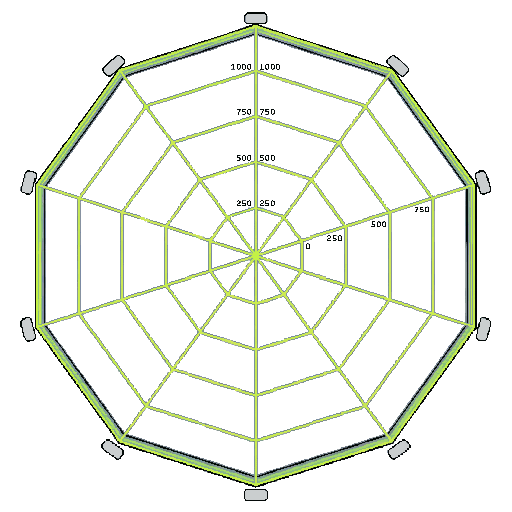
Every creature is a Metaplex Core NFT whose genome lives in on-chain attributes. The sheet displays all of it: twelve loci, terrain affinities, pedigree. Nothing hidden, nothing to reveal later. Information becomes the aesthetic.
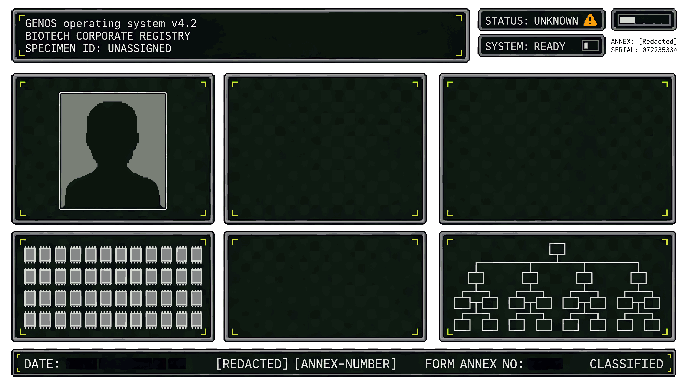

Species ID, status and serial: the GENOS record line.
The specimen as rendered by its genome. What you catch is what you see.
Two alleles per locus. The scanner shows exactly what the chain stores.
Performance axes computed by the same engine that runs the races.
Where this build shines. The meta rotates hourly: every freak has its hour.
Ancestry and palmares travel with the asset on every transfer.
Specimen Transfer Registry · Form GP-0097
Specimens change hands between players: genome, pedigree and palmares travel with the creature. Lineages, freaks and proven racers each find their price; the operator never buys or sells, it only keeps the ledger.
The commission is applied at the asset level on every transfer, in both directions. Not a policy, a rule the chain applies.
Genome, pedigree and palmares are on-chain attributes. They move with the specimen, to whoever holds it next.
A listing is a specimen, not a grade or an access right. Grades are run, never bought: nothing competitive changes hands.
Document GP-0002: Verification protocol
The physics engine is bit-deterministic: fixed 60 Hz timestep, seeded PRNG, zero wall-clock. Hourly map seeds and wild genomes are published on-chain via Switchboard. Anyone can replay a race from the seed and verify the clock: the replay is a few kilobytes of inputs, not a video.
Switchboard publishes the hourly map seed and wild genomes to Solana. Nobody sees them early; the same seed reaches every player in a bracket.
The open-source engine runs that seed at a fixed 60 Hz with a seeded PRNG. Same inputs, same race, bit for bit, every time.
A replay is a few kilobytes of inputs. Re-run it against the on-chain Merkle root and compare the clock, no trust required.
The same TypeScript engine runs the game and the balancing harness. No separate model.
Download a race bundle, re-simulate it against the on-chain Merkle root, compare.
Genome, seeds and race proofs live on-chain. The physics runs off-chain but stays open-source.
Document GP-0100: Rollout schedule
Founders get early access, never a permanent wall. The free public opening is announced and dated from the start.
Founder packs on sale. Numbered cage rights, a founder foil, invitation codes. No game access yet.
Two weeks reserved for pack holders and invited players. The soft-launch.
Open to everyone, for free. Announced and dated from day one: the clause that keeps Phase A honest.
Document GP-0124: Founders registry
A Genesis pack holds numbered cage rights, a founder foil never re-issued, invitation codes, and two weeks of early access. The genome distribution is the same as the wild: founders are first, never favoured. Early-bird price ends when the public tier opens; both prices are posted, never a surprise.
A fixed number of editions, never re-minted. The registry number is the rarity.
Everything in the pack is listed before payment. Nothing random is ever sold.
The free public phase is announced and dated from the pre-sale. Never a permanent wall.
Document GP-0009: Frequently filed
No. You always see the full stats before you decide to pay a fixed price, and race outcomes are decided by skill on a published seed. The randomness lives in a currency with no value; the money lives in a world with no randomness.
No. Money buys comfort and time: stable slots, cosmetics, buying from other players. Never a competitive edge you cannot reach by playing. Grades are run, never bought.
The specimen: its genome, its history, its palmares (a Metaplex Core NFT with the genome in on-chain attributes). Never a rank, never an access right.
No. You can sign in with email and get an invisible wallet, or connect a native wallet if you have one. The first capture and first race are free.
The seed is published on-chain and the engine is deterministic and open-source. Anyone can replay the exact race and check the clock.
Prize pools are real USDC, funded by player entry tickets minus a posted organiser fee: a contest-of-skill model. The platform never takes a side and never promises anything back. Placement is decided by skill on a published seed, so the outcome is yours to compute, not ours to grant.